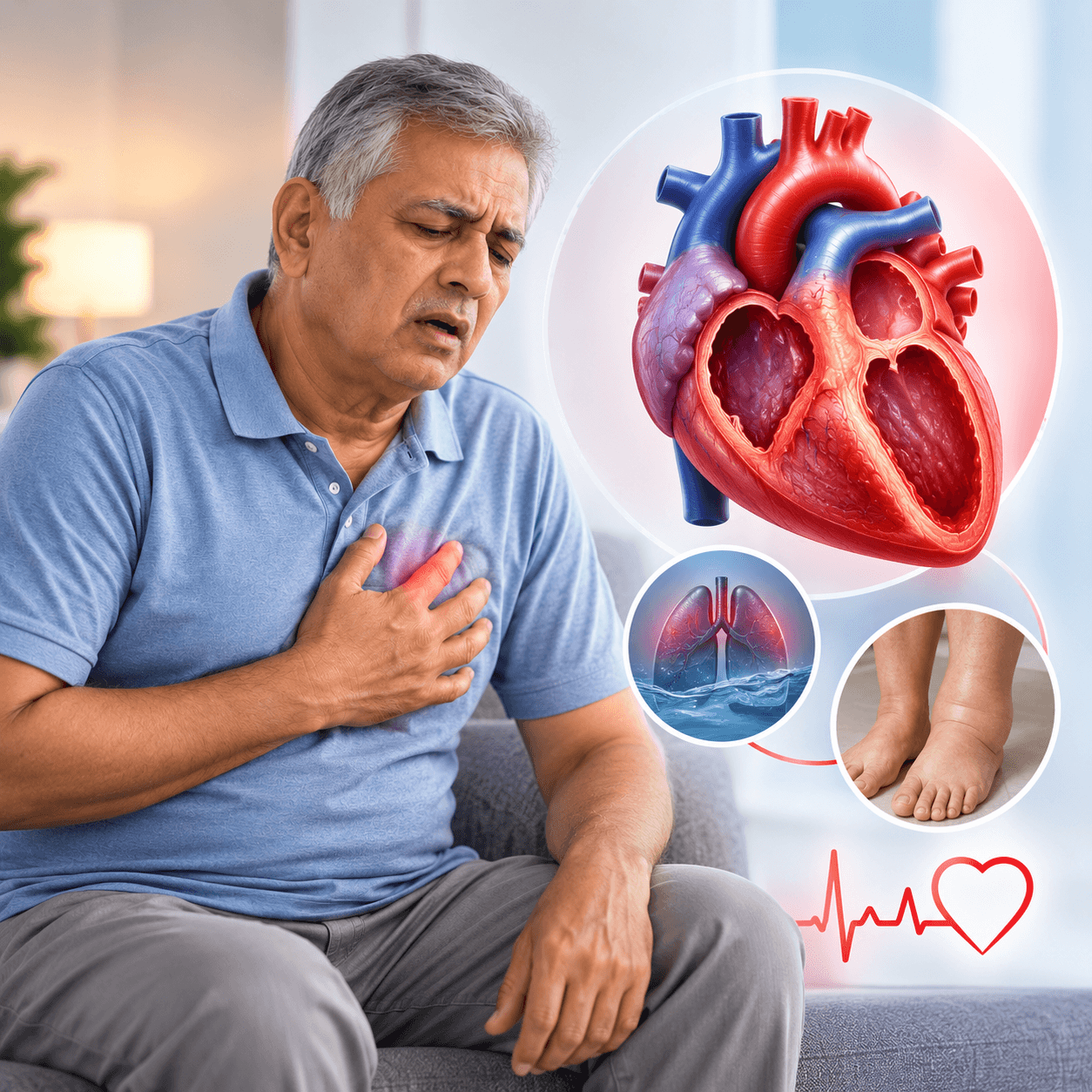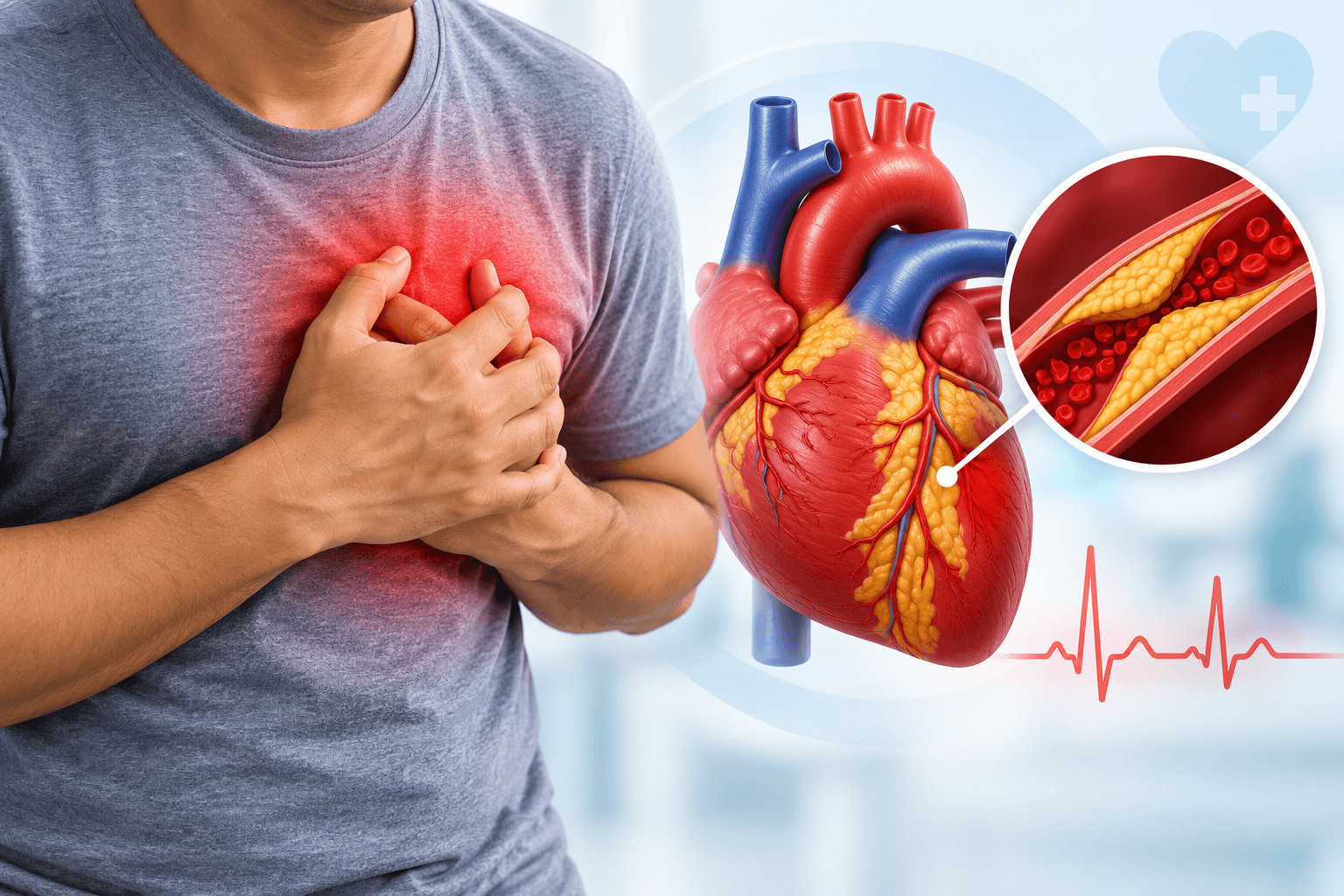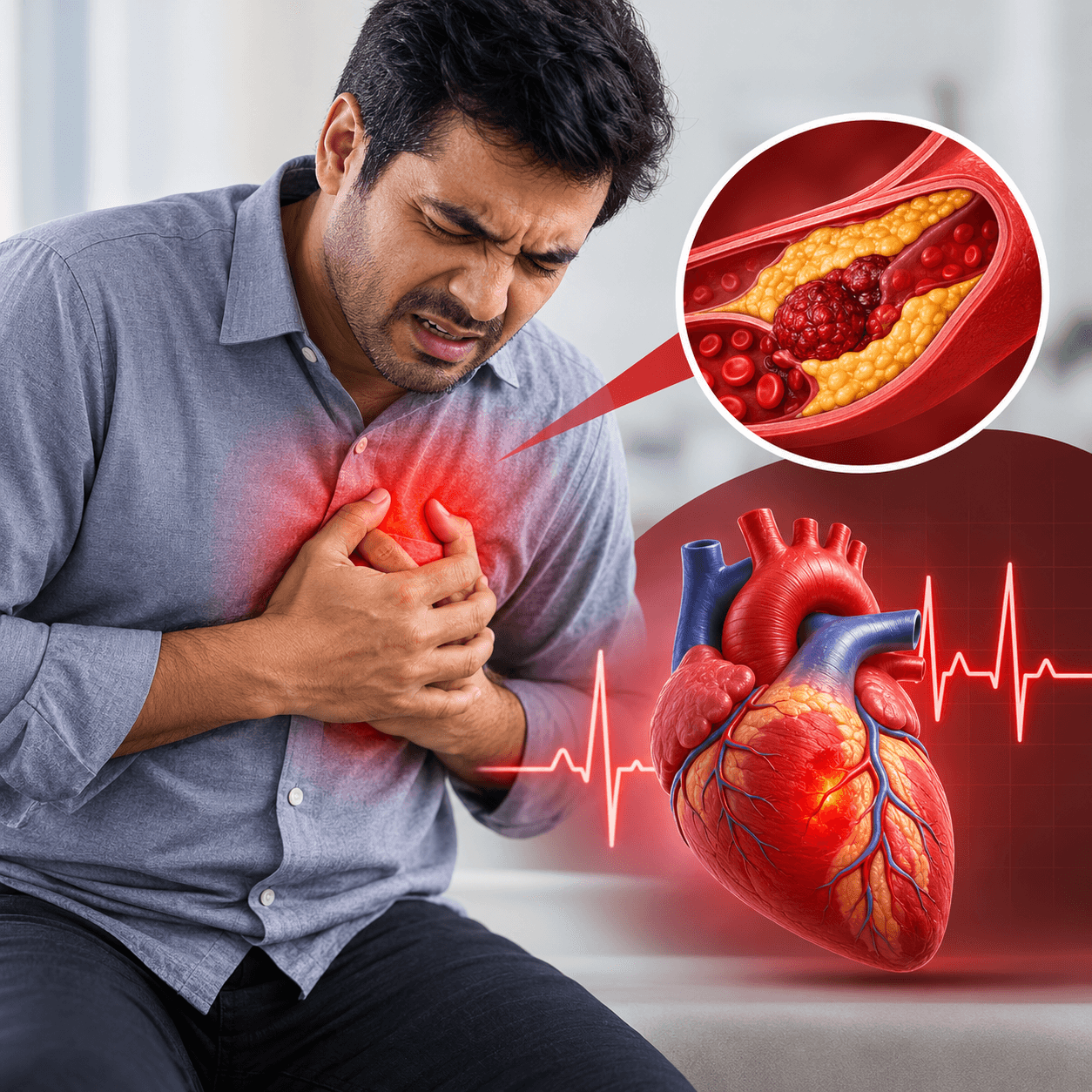
A heart attack, also called a myocardial infarction, occurs when blood flow to part of the heart muscle becomes blocked or severely reduced. Without enough oxygen-rich blood, the affected heart muscle can become damaged. A heart attack is a medical emergency and requires immediate medical attention.
What Causes a Heart Attack?
Most heart attacks occur when a fatty deposit or plaque inside a coronary artery becomes unstable and develops a blood clot. The clot can block blood flow through the artery and prevent oxygen from reaching part of the heart muscle.
- Coronary artery disease can increase the risk of a heart attack.
- High blood pressure can damage blood vessels over time.
- High cholesterol can contribute to plaque buildup in the arteries.
- Smoking and tobacco use can significantly increase cardiovascular risk.
- Diabetes can increase the risk of damage to blood vessels.
- Physical inactivity, excess body weight, and an unhealthy diet can contribute to cardiovascular risk.
- A family history of heart disease may also increase risk.
Common Warning Signs of a Heart Attack
Heart attack symptoms can vary from person to person. A common warning sign is chest discomfort, which may feel like pressure, squeezing, fullness, or pain. The discomfort may spread to the arm, shoulder, back, neck, jaw, or upper abdomen.
- Chest pressure, tightness, discomfort, or pain.
- Shortness of breath.
- Cold sweating.
- Nausea or vomiting.
- Dizziness or lightheadedness.
- Unusual or extreme tiredness.
- Discomfort that spreads to the arm, shoulder, back, neck, or jaw.