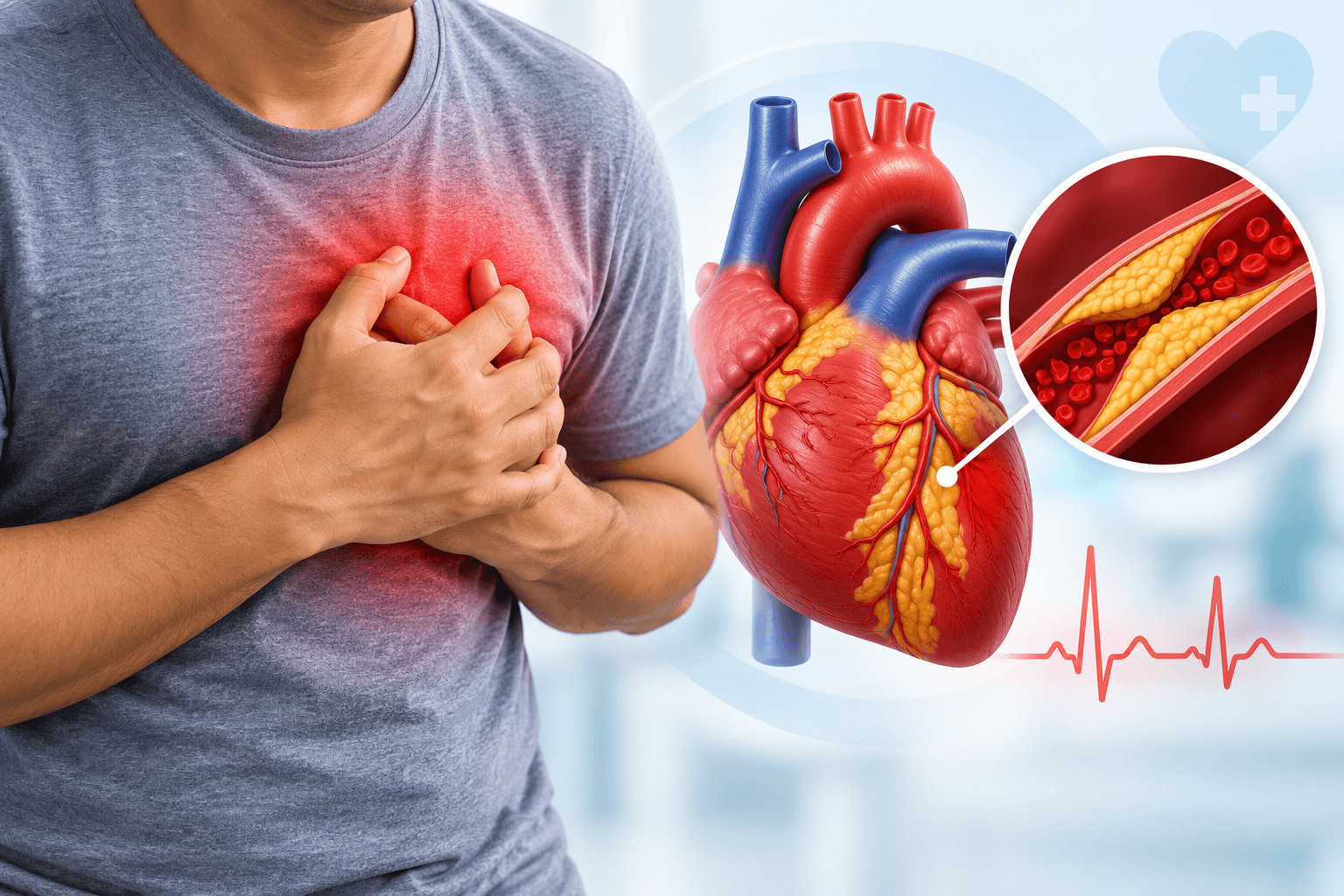
Coronary artery disease (CAD) is a common heart condition that occurs when plaque gradually builds up inside the arteries that supply blood to the heart muscle. This buildup can narrow the arteries and reduce the flow of oxygen-rich blood to the heart.
What Is Coronary Artery Disease?
The coronary arteries supply oxygen and nutrients to the heart muscle. Over time, cholesterol, fatty substances, and other materials can accumulate within the artery walls and form plaque. As plaque increases, the arteries may become narrower and less able to deliver sufficient blood to the heart.
- High blood pressure can damage artery walls and contribute to plaque formation.
- High cholesterol can increase the amount of cholesterol available for plaque buildup.
- Smoking can damage blood vessels and increase cardiovascular risk.
- Diabetes can contribute to changes in blood vessels and increase the risk of coronary artery disease.
- Physical inactivity, excess body weight, and an unhealthy diet can also increase cardiovascular risk.
- A family history of heart disease may increase an individual's risk.
What Are the Symptoms of CAD?
Some people with coronary artery disease may have no noticeable symptoms, particularly in the early stages. When symptoms occur, they may include chest discomfort or pressure, shortness of breath, unusual tiredness, or discomfort that may spread to the arms, shoulders, back, neck, or jaw.
Do Not Ignore Chest Discomfort
New, severe, or persistent chest discomfort, especially when accompanied by breathlessness, sweating, nausea, dizziness, or pain spreading to the arm or jaw, requires urgent medical evaluation.
How Is CAD Diagnosed?
A doctor may evaluate coronary artery disease using a combination of medical history, physical examination, blood tests, and cardiovascular investigations. Depending on the individual situation, tests may include an ECG, echocardiogram, stress testing, CT coronary angiography, or coronary angiography.